Laser Cut Decorative Plant Box SVG
First Impressions: Clean, Craft-Forward, and Quietly Sophisticated
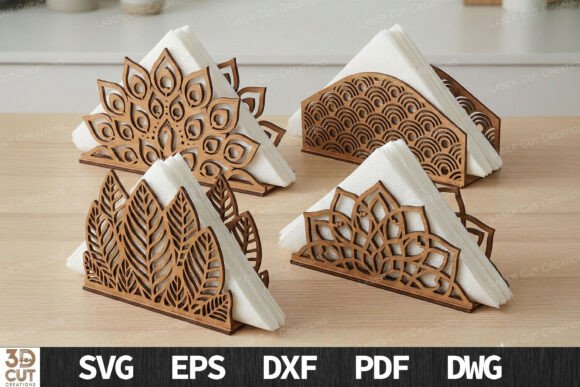
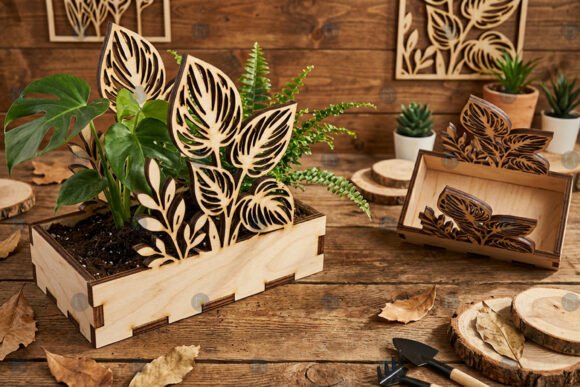
When I opened the Laser Cut Decorative Plant Box SVG, my immediate thought wasn’t “Oh, another plant motif”—it was “This has presence.” The lines are crisp but not rigid; the box shape is grounded and dimensional, with subtle cutout details suggesting foliage or vine accents. It doesn’t scream “trendy” or lean into botanical overload. Instead, it feels intentional—like something you’d laser-cut from birch plywood for a boutique nursery shelf, then translate thoughtfully into embroidery for a linen tea towel or an organic cotton tote. As a designer who evaluates hundreds of digital embroidery files each year, I appreciate how this design balances negative space and structure. It’s not fussy—but it *is* memorable.
Where It Shines in Real Embroidery Projects
I tested the Laser Cut Decorative Plant Box SVG as the central motif on a set of custom linen pillow covers for a local home goods shop—and it worked beautifully. Because the original vector is built for precision (laser cutting, Cricut, Glowforge), its clean edges translate well to satin-stitched borders and controlled fill-stitch interiors. On medium-weight fabric with light tear-away stabilizer, the design held its shape without puckering, even across gentle curves. It also scaled cleanly down to 3.2” wide for baby onesies—no loss of legibility in the box outline or delicate interior cuts.
For small business owners and Etsy sellers, this design bridges home decor and wearable craft. Think: embroidered aprons for garden-center staff, minimalist sweatshirt fronts for urban florists, or stitched patches for eco-conscious apparel brands. Its neutral botanical theme reads as timeless—not seasonal—so it avoids quick burnout in your product lineup. I’ve seen similar motifs flop on holiday-themed items, but here, the restraint makes it equally viable for wedding favors (think: seed packet + embroidered box motif) or kitchen towels sold year-round.
Where Caution Is Needed—Not Flaws, Just Fit
This isn’t a one-size-fits-all embroidery file. Its strength lies in clarity—but that means it demands thoughtful execution. On stretchy fabrics like jersey or ribbed knit (common in custom sweatshirts), the box’s straight lines can distort if stabilizer isn’t firm enough. I recommend cut-away or hybrid stabilizer for anything with give. On dark fabrics, avoid ultra-light thread colors unless you’re adding underlay; the open areas between elements need contrast to read clearly.
Tiny corners and fine interior cutouts—while elegant in vector form—require attention in stitch format. If you convert this SVG to an embroidery file yourself, check how those inner vine-like shapes render as satin or running stitch. Dense fill areas may benefit from reduced stitch density to prevent stiffness, especially on baby embroidery or lightweight tea towels meant for frequent washing. And on curved surfaces—like caps or rounded pillow gussets—test placement first. The box’s geometry works best when aligned with flat or gently contoured planes.
What It Adds to Your Finished Product—Beyond Aesthetics
Using the Laser Cut Decorative Plant Box SVG elevates perceived value without overcomplicating production. Customers notice clean lines. They feel craftsmanship in balanced spacing and confident proportions. For handmade product sellers, that translates directly to trust: a well-executed box motif signals intentionality—not just decoration. It supports brand consistency too. Whether you’re stitching it in sage green on oatmeal linen or charcoal grey on black canvas, the shape remains recognizable and cohesive across your product range.
It also performs quietly in digital spaces. In printable mockups or Etsy listing previews, it reads clearly at thumbnail size—no fuzzy edges, no lost detail. That’s rare for botanical designs, which often blur or pixelate when scaled down. As a digital embroidery file, it encourages repeat use: once you’ve dialed in stabilizer, thread choice, and hoop placement, you can replicate it reliably across dozens of tote bag designs or personalized gifts.
Practical Designer Notes Before You Stitch
- Always test first: Run a sample on scrap fabric matching your final project’s weight and stretch.
- Check thread color contrast: Especially where interior cutouts meet outer borders—low-contrast combos can mute the design’s structure.
- Review stitch density: High-density fills may overwhelm lightweight fabrics; adjust if needed for drape and wash durability.
- Confirm hoop size compatibility: The design’s width and height matter more than total stitch count—measure before hooping.
- Inspect small details: Zoom in on corners and interior elements in your embroidery software—some converters oversimplify fine vectors.
- Mock it in black and white: Helps spot contrast issues before committing thread or fabric.
- Use proper stabilizer: Light to medium cut-away for knits; tear-away for stable wovens like linen or canvas.
- Verify licensing: Since this is a Laser Cutting design adapted for embroidery use, confirm whether commercial embroidery rights are included before selling finished products or digital embroidery files.
A Design That Earns Its Place—Not Just Fills Space
The Laser Cut Decorative Plant Box SVG doesn’t chase attention—it invites appreciation. It’s the kind of design that looks equally at home on a hand-stitched baby blanket and a professionally digitized embroidered patch for a craft fair booth. For embroidery designers and creative entrepreneurs, it’s a versatile asset—not because it’s flashy, but because it’s resolved. Its quiet confidence gives your handmade product room to breathe, your customer reason to pause, and your small shop a signature touch that feels both fresh and familiar. That’s not easy to find. When it’s done right, this isn’t just a plant box—it’s a quiet statement of care.