Personalized Kids Room Sign Laser Cut for Home Decor
As a digital product creator who’s launched over 200 SVG bundles, Canva templates, and printable collections across Etsy, Creative Fabrica, and Shopify, I tested Personalized Kids Room Sign Laser Cut last week while prepping a spring nursery-themed digital shop update. My goal? To see if it delivers real commercial value—not just aesthetic charm—for sellers building scalable, on-brand product lines.
First Impression: Playful Yet Polished, With Clear Niche Intent
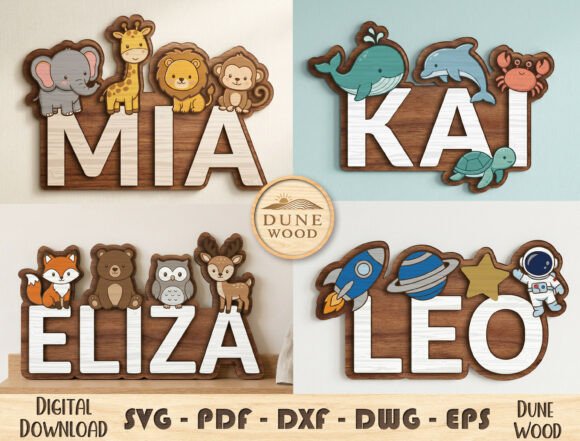
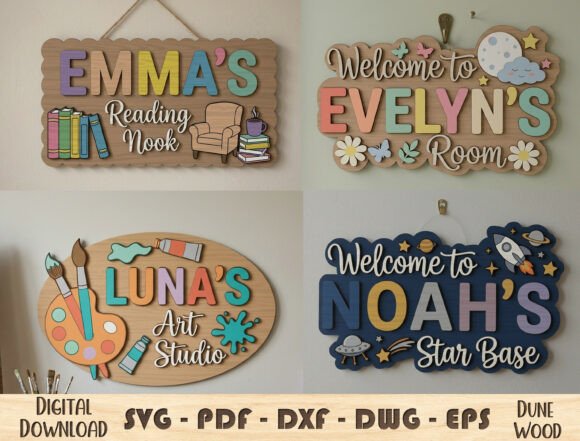
The moment I opened the files, I noticed the layered name plaque concept—clean outlines, subtle shadow depth, and intentional negative space between letters. It leans into soft modern whimsy: rounded sans-serif base shapes with optional floral or geometric accents (depending on the variant), not overly cutesy or cartoonish. That balance makes it work equally well for gender-neutral nurseries, Montessori-inspired reading nooks, and minimalist art studios. It feels handmade but commercially ready—ideal for buyers seeking premium Home Decor that doesn’t scream “mass-produced.”
Where It Fits Naturally in Your Product Pipeline
This isn’t just another clipart file. Personalized Kids Room Sign Laser Cut is a versatile graphic design asset that scales across multiple revenue streams:
- SVG products for Cricut users—especially those selling custom-cut wood or acrylic signs via local craft fairs or print-on-demand partners with laser services;
- PNG designs with transparent backgrounds for printable wall art, planner stickers, greeting cards, and invitation templates;
- Sublimation designs when flattened and color-optimized for mugs, tumblers, and tote bags;
- Canva templates where customers personalize names, fonts, and accent colors before downloading;
- Digital download bundles, like “Nursery Essentials Kits” or “Themed Playroom Collections,” where this sign anchors visual storytelling;
- Social media graphics for bloggers and small business branding—think Instagram carousels showing room makeovers or seasonal decor transitions.
Because it’s built around personalization (name + optional theme), it pairs naturally with editable text layers in Canva, Illustrator, or even basic PowerPoint—making it accessible to non-designers while still feeling premium.
How It Strengthens Product Presentation
I dropped Personalized Kids Room Sign Laser Cut into three mockups: a framed nursery wall scene, a neutral-toned shelf display, and a flat-lay reading corner layout. Instantly, it lifted thumbnail appeal—its layered depth created visual hierarchy without clutter. On Etsy, where scroll speed is ruthless, that contrast and dimension helped the listing stand out among flatter, single-layer competitors.
It also reinforced brand consistency. When bundled with coordinating border elements, font pairings (I tested it with Playfair Display for elegance and Quicksand for playfulness), and matching color palettes, it became the anchor of a cohesive collection—not an isolated design. That cohesion increases perceived value and encourages add-on sales (e.g., “Add Matching Bookshelf Labels”).
Best Use Cases for Maximum ROI
This asset shines brightest in:
- Large-format product previews (e.g., 3000px-wide banner images for Shopify stores);
- Themed digital bundles—especially seasonal ones like “Back-to-School Reading Corner Kit” or “Baby Shower Printables”;
- Printable products where clean layering translates well to PDF instructions and cut guides;
- Creative marketplace listings on Etsy or Creative Fabrica, where layered SVGs with clear naming conventions (e.g., “Sign_Base.svg”, “Floral_Accent.svg”) earn higher trust scores;
- Social media promos—the design holds up well in square and vertical Reels thumbnails when simplified to one dominant color + white background.
Where to Proceed With Caution
Don’t force it into contexts where precision or simplicity is critical:
- Avoid using intricate variants for tiny sticker designs—fine details may not render cleanly at 0.5” scale;
- Steer clear of overly complex layouts in text-heavy templates—it’s meant to be the focal point, not background filler;
- Test contrast rigorously on dark backgrounds; some light-colored accents vanish without manual adjustment;
- Verify SVG cut paths before bundling for Cricut projects—some versions include decorative interior cuts that require manual simplification for vinyl or iron-on use;
- Never assume resolution—always check PNG exports are 300 DPI and SVGs contain vector-friendly anchor points for scaling.
Practical Seller Notes Before You List
Before publishing any Etsy product or print-on-demand listing featuring Personalized Kids Room Sign Laser Cut, do these five things:
- Test on real mockups—not just preview panels. I used Placeit and Smartmockups to simulate wood grain, matte acrylic, and linen-printed versions;
- Preview as a marketplace thumbnail at 400x400px—does the name layer remain legible? If not, simplify or adjust stroke weight;
- Check transparency on both white and charcoal backgrounds—PNGs must drop shadows cleanly without halo artifacts;
- Confirm commercial licensing—if reselling finished physical goods (e.g., laser-cut signs on Amazon Handmade), ensure the license permits end-product sales, not just digital redistribution;
- Organize files clearly for customers: separate SVG layers, include a PDF guide with font suggestions and pairing tips, and label variants by use case (“For Sublimation”, “Cricut Ready”, “Printable Only”).
Pair it thoughtfully: serif fonts for timeless elegance, rounded sans-serifs for modern playfulness, and delicate scripts only for accent text—not primary names—to maintain readability and cut accuracy.
In short, Personalized Kids Room Sign Laser Cut isn’t a one-trick asset. It’s a flexible, audience-aligned digital product that supports thoughtful small business branding, strengthens visual hierarchy in listings, and fits seamlessly into broader design bundles. Used intentionally—with testing, context awareness, and smart presentation—it earns its place in your next creative marketplace launch.