Tissue Box Laser Cut Funny Animals SVG
First Impression: Playful, Compact, and Surprisingly Versatile
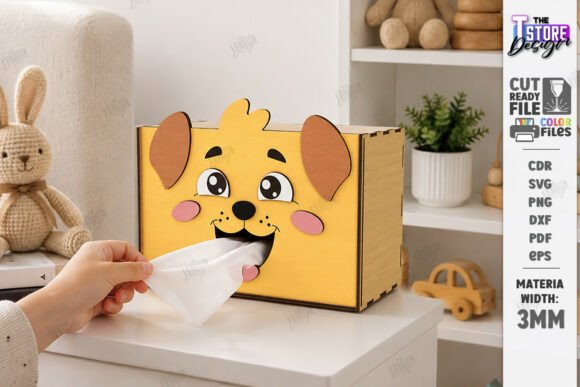
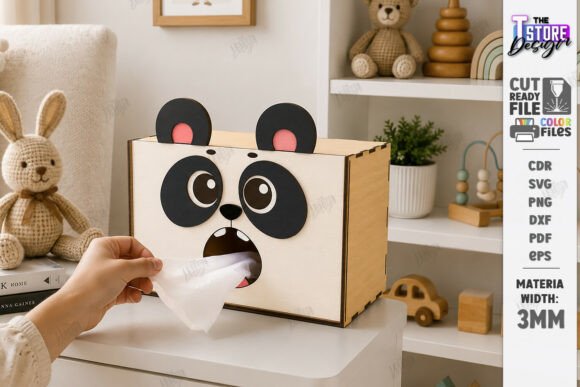
When I opened Tissue Box Laser Cut Funny Animals SVG, I wasn’t expecting much beyond a novelty desktop organizer—but the charm hit immediately. The layered cartoon animals (panda, fox, frog, monkey, rabbit, pig) aren’t just cute; they’re cleverly scaled and spaced for visual balance. Each animal has expressive eyes, rounded limbs, and gentle curves—no sharp angles or fussy linework. That’s huge for embroidery. In my experience, overly detailed laser-cut vector files often translate poorly to stitch: tiny ears vanish, whiskers blur into blobs, and layered outlines fight for clarity under thread. Not here. This design breathes. It feels intentionally simplified—not stripped down, but thoughtfully distilled.
A Real Project Test: Embroidering a Nursery-Themed Pillow Cover
Last week, I used Tissue Box Laser Cut Funny Animals SVG as inspiration for a custom embroidered pillow cover for a client’s baby nursery. Instead of cutting wood, I adapted the panda and fox silhouettes into an applique design—clean satin-stitched edges, soft fill-stitch bodies, and subtle running-stitch accents for texture. The result? Warm, tactile, and instantly recognizable. Parents loved it—not because it was “perfect,” but because it felt handmade, joyful, and age-appropriate. That’s the quiet strength of this file: it doesn’t shout. It invites. And that translates directly to customer trust, especially for Etsy sellers or boutique owners curating gentle, intentional products.
Where It Shines (and Where It Needs Care)
Tissue Box Laser Cut Funny Animals SVG works beautifully on stable, medium-weight fabrics like cotton twill, linen-blend tea towels, and midweight sweatshirt fleece. On a tote bag? Perfect. The scale holds up at 3.5–4 inches wide—large enough to read clearly, small enough to sit neatly beside a monogram or phrase. As a sweatshirt embroidery, it reads well on left-chest placement, especially when paired with light-thread contrast (think mint thread on charcoal fabric).
But—and this matters—don’t force it onto curved surfaces like structured caps without testing. Those rounded animal heads lose definition if hooped too tightly or stitched on stiff buckram. Likewise, avoid dense fill stitches on thin cotton poplin: the design’s charm lies in its openness, not heaviness. On dark fabric, stick to high-contrast thread (ivory, lemon yellow, sky blue)—the animals’ shapes rely on silhouette recognition, not fine detail.
It’s also not ideal for baby onesies with tight seams or stretchy knit bodysuits unless you reduce size significantly and add lightweight tear-away stabilizer. Tiny ears and snouts can disappear in dense stitching or shift on unstable fabric. If you’re making embroidered patches, use it as a base shape—not a full-detail motif. Let the applique fabric carry the personality; let the stitch define the boundary.
Design Integrity Meets Commercial Practicality
As a designer who supplies embroidery files to other craft businesses, I pay close attention to how a design supports brand consistency. Tissue Box Laser Cut Funny Animals SVG does that quietly but effectively. Its cohesive theme (whimsical, non-gendered, all-ages friendly) makes it easy to extend across product lines: a matching tea towel set, a line of embroidered napkin rings, even a holiday gift box tag series. For Etsy sellers, that means fewer design decisions—and more time spent on photography, mockups, and customer care.
Visually, it avoids trend fatigue. No glitter fonts, no forced puns, no overused “cute” tropes. Just clean, character-driven shapes. That elevates perceived value—customers see craftsmanship, not clip art. And because the layout is inherently modular (each animal stands alone), you can mix and match for seasonal listings: swap the panda for a bunny at Easter, the fox for a reindeer at Christmas—without redesigning from scratch.
Practical Designer Notes Before You Stitch
- Always test on scrap fabric first—especially if using textured weaves or blends. What looks crisp in vector may soften in thread.
- Check stitch density. If adapting for machine embroidery, simplify any overlapping layers in the original SVG—embroidery machines don’t interpret vector transparency the same way laser cutters do.
- Confirm hoop size compatibility. These animals scale well between 3" and 5", but go smaller only if your machine handles fine satin stitch reliably.
- Inspect small details—like eye highlights or paw pads—before finalizing. They may need manual cleanup or slight enlargement for clarity.
- Test black-and-white mockups. Does the panda still read as “panda” without color cues? If yes, you’ve got strong silhouette integrity.
- Use appropriate stabilizer: cutaway for knits, tear-away for stable wovens, and lightweight fusible for delicate linens.
- Review licensing terms carefully. Since this is marketed as a laser-cut template, confirm whether commercial embroidery use—or resale of finished embroidered items—is permitted before listing on Etsy or at craft fairs.
Final Thought: A Design That Serves the Maker, Not Just the Machine
Tissue Box Laser Cut Funny Animals SVG isn’t flashy. It won’t dominate your portfolio with technical complexity. But it’s the kind of file that earns repeat orders—because it delivers reliably, adapts gracefully, and feels authentically handmade in the final product. Whether you’re embroidering a one-of-a-kind baby blanket, building a cohesive line of nursery decor, or creating printable mockups for your digital shop, this design respects your time, your tools, and your customers’ expectations. It’s practical joy—stitched, not shouted.