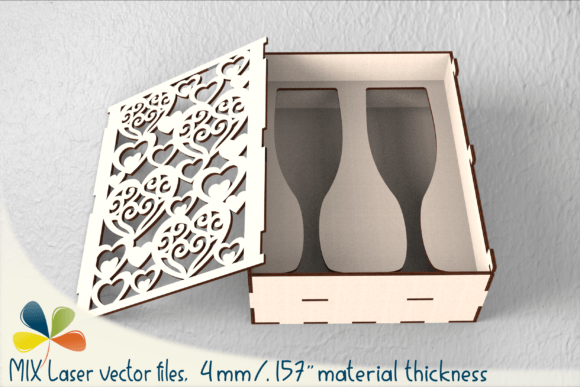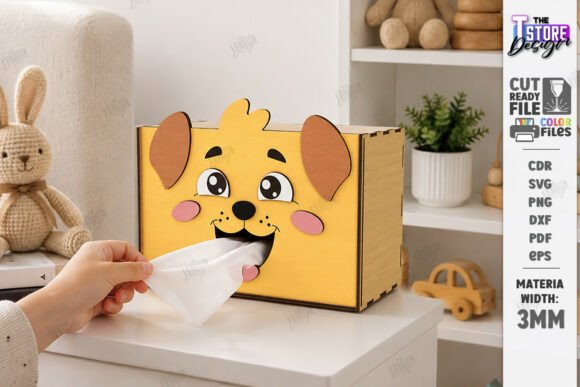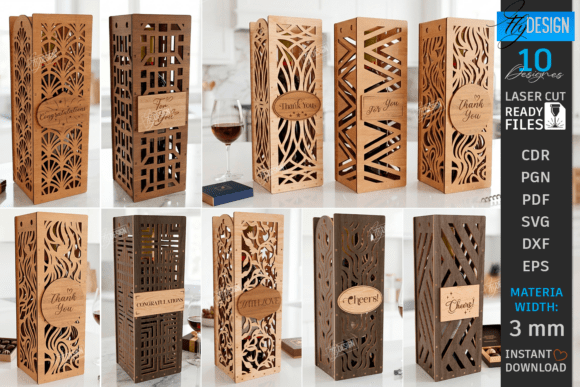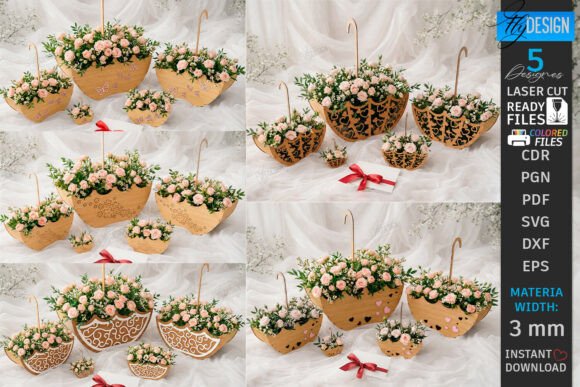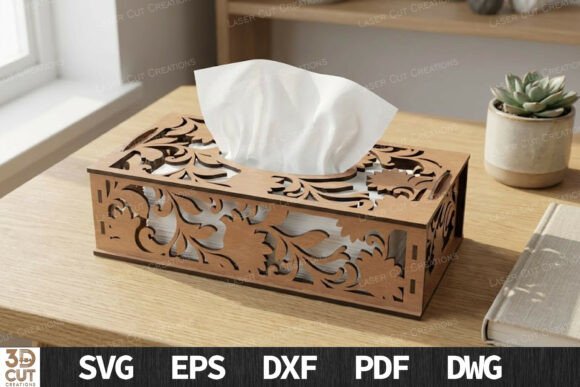
Floral Wooden Tissue Box Cover: Laser Cutting for Boxes
As a brand designer who’s helped over 70 local businesses refine their visual identity—from artisanal candle studios in Portland to family-run bakeries in Nashville—I recently evaluated the Floral Wooden Tissue Box Cover for a real-world project: rebranding a women-led, small-batch botanical skincare line based in Asheville. What stood out immediately wasn’t just its delicate floral motifs or warm woodgrain texture—but how effortlessly it bridges handmade authenticity with quiet luxury. It reads as organic, gentle, and intentionally crafted—not mass-produced, not overly ornate, but deeply tactile. That’s rare in digital design assets.
A Mood That Builds Trust Before the First Touch
This isn’t decorative clipart. The Floral Wooden Tissue Box Cover carries a mood: soft elegance with grounded warmth. Think linen napkins folded beside ceramic jars, not glossy e-commerce banners. It suggests care, ritual, and attention to sensory detail—ideal for local businesses where customers value story and substance: handmade soap makers, slow-food cafés, apothecary boutiques, florists launching seasonal gift sets, or children’s product brands emphasizing natural materials. It leans feminine without being cloying, rustic without feeling dated, and decorative without sacrificing clarity. For small business branding, that balance is gold—it helps customers *feel* your values before they read your “About” page.
Where This Graphic Design Asset Earns Its Keep
In practice, the Floral Wooden Tissue Box Cover shines across touchpoints where warmth and craftsmanship need to land instantly:
- Packaging design: As an accent on kraft paper boxes, matte-finish labels, or belly bands for candle or soap packaging—especially when paired with hand-lettered typography.
- Product mockups: Elevates digital presentations for Instagram carousels, Etsy listings, or wholesale pitch decks by grounding digital visuals in tangible texture.
- Printable design & promotional visuals: Works beautifully on thank-you cards tucked inside orders, seasonal flyers for holiday markets, or branded stickers sealing product bags.
- Social media graphics: Serves as a hero element in Reels thumbnails, Pinterest pins, or Facebook event banners for pop-up shop launches—adding instant visual cohesion without competing with copy.
- Local business signage & in-store branding: When scaled appropriately, it enhances chalkboard menus, shelf talkers, or counter displays in coffee shops or boutiques seeking cohesive, non-generic charm.
Real Brand Impact—Beyond Decoration
Using this asset thoughtfully strengthens core pillars of professional branding. On a recent skincare label refresh, we placed a simplified version of the Floral Wooden Tissue Box Cover as a subtle border around ingredient callouts—immediately improving visual hierarchy and guiding the eye toward key benefits. Customers reported the packaging felt “more intentional” and “easier to trust.” That’s not accidental. The design supports stronger first impressions (shelves or feeds), clearer visual hierarchy (guiding attention without shouting), consistent brand identity (repeating motif across labels, cards, and web banners), and more polished marketing visuals—especially critical for local businesses competing against national brands with bigger budgets.
Where to Use It—and Where to Pause
The Floral Wooden Tissue Box Cover excels in spaces that invite pause and appreciation: hero graphics, decorative brand elements, boutique visuals, seasonal packaging accents, and social media campaign graphics. But it demands thoughtful placement. Avoid using it:
- On formal corporate branding (e.g., law firm letterhead or B2B tech reports);
- In tight spaces like tiny jar labels or ingredient-heavy food packaging where legibility must dominate;
- Over low-contrast backgrounds (e.g., light gray on off-white) where woodgrain texture disappears;
- Alongside ultra-minimalist luxury brands that rely on negative space and restraint—here, it can feel visually heavy;
- Where decoration competes with regulatory text, barcodes, or safety icons.
Practical Designer Notes You Can’t Skip
Before locking this into your brand system, test rigorously:
- Mock it on real packaging: Print at actual size on your chosen substrate—kraft, recycled chipboard, or matte laminate—to assess how laser-cut texture translates physically.
- Check black-and-white usage: Does the floral detail hold up in monochrome? Crucial for cost-effective printing or embossing.
- Preview at small scale: Will it read clearly on a 1.5” hang tag or 2” sticker? Some flourishes vanish below 12pt.
- Test with your brand palette: Does it harmonize with your primary color + one neutral? Try overlays on beige, sage, terracotta, and deep navy.
- Compare to competitors: Does it differentiate—or blend in with other “botanical” assets on your shelf or feed?
- Inspect SVG editability: Are layers named? Can you isolate stems from blossoms? Essential for customizing per product line.
- Verify PNG transparency: No fuzzy edges or stray pixels—clean cutouts are non-negotiable for labels and digital use.
- Font pairing tests: Try it beside serif (e.g., Playfair Display), sans serif (e.g., Montserrat), script (e.g., Pacifico), and display fonts (e.g., Cinzel). Does it complement—or clash?
- Confirm commercial license: Ensure your source grants rights for physical product sales, client work, and unlimited digital distribution—not just personal use.
For local business owners, handmade sellers, and creative entrepreneurs building brands rooted in authenticity, the Floral Wooden Tissue Box Cover isn’t just another graphic design asset. It’s a quiet amplifier—elevating product labels, anchoring packaging design, enriching social media graphics, and reinforcing brand identity with tactile warmth. Used with intention, it transforms functional items—tissue boxes, gift wraps, thank-you cards—into meaningful brand moments. And in a marketplace crowded with generic clipart and AI-generated fluff, that kind of grounded, human-centered design doesn’t just look good. It builds trust, invites connection, and makes your small business unforgettable.