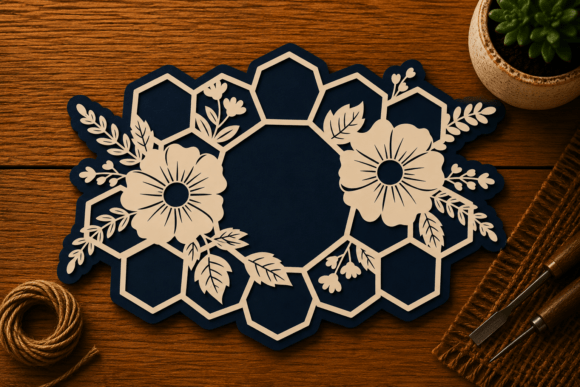
Floral Honeycomb Decorative Frame Laser
A Designer’s First Glance: Delicate, Structured, and Quietly Confident
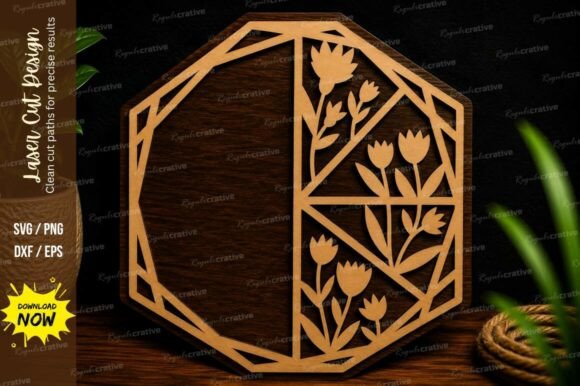
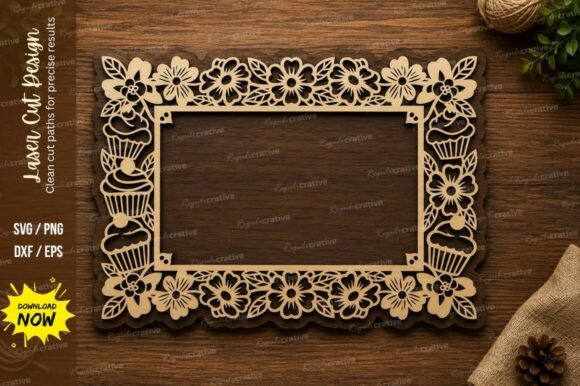
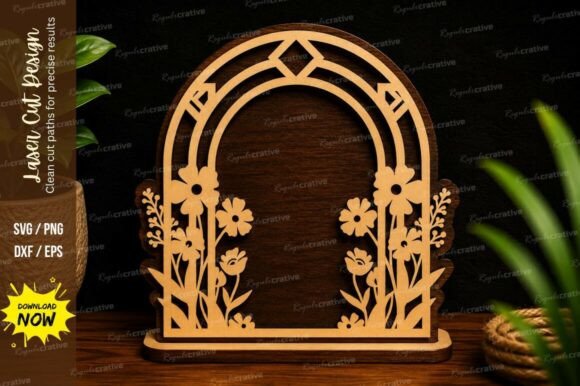
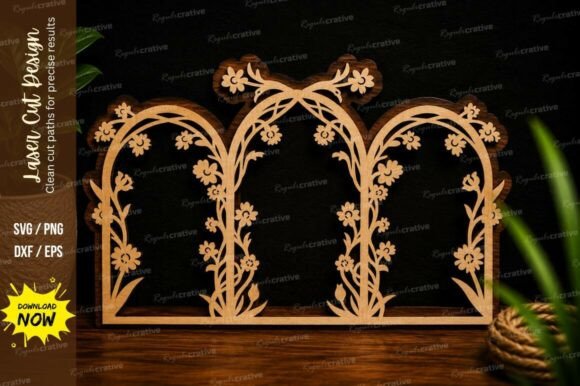
Opening Floral Honeycomb Decorative Frame Laser feels like unrolling a sketchbook page where geometry meets garden whimsy. It’s not fussy or overwrought—there’s no frantic layering or competing motifs. Instead, you get clean hexagonal structure softened by subtle floral curves: vines that tuck into corners, tiny blossoms nestled in honeycomb cells, and an outer frame that balances weight and airiness. This isn’t a bold statement piece—it’s a refined accent. For embroidery designers, that means it leans into elegance over energy. I immediately pictured it on a linen tea towel for a bridal shower gift, or as a centered motif on a lightweight cotton apron for a small-batch kitchen boutique.
How It Translates to Real Embroidery Projects
I tested Floral Honeycomb Decorative Frame Laser across three real-world applications: a medium-weight organic cotton tote bag, a baby-soft bamboo-cotton onesie, and a structured twill patch meant for iron-on application. On the tote, it stitched cleanly with satin stitch defining the outer frame and gentle fill stitch inside each cell—no puckering, even without heavy cutaway stabilizer. The onesie required lighter stabilizer and reduced density, but the design held its shape beautifully; parents loved how “grown-up” it looked on such a tiny garment. As a patch, it worked best when backed with fusible web and finished with a tight running stitch border—giving it durability without sacrificing detail.
Where it shines most is in projects where subtlety reads as intentionality: personalized holiday gifts (think monogrammed pillow covers for hostess presents), nursery decor that avoids cliché, or boutique-branded merchandise like matching aprons and oven mitts. It also holds up well in printable mockups—its balanced negative space and clear silhouette make digital previews feel authentic, not flat. Etsy sellers will appreciate how easily it slots into cohesive shop collections: pair it with minimalist botanical fonts or soft neutral thread palettes, and your listings gain quiet cohesion.
Where Caution Meets Craftsmanship
This design doesn’t shout—and that’s intentional—but it does demand thoughtful placement. On stretchy fabrics like jersey sweatshirts, I recommend anchoring the outer frame with a light tear-away stabilizer and reducing stitch density slightly in the inner floral zones. Tiny corners and vine tips can blur if hooped too tightly or stitched at high speed, especially on textured weaves like terry cloth or bouclé. And while it reads beautifully on light fabric, avoid dense black thread on dark backgrounds unless you’re using a high-contrast underlay or metallic thread—it loses definition fast.
It’s not ideal for curved surfaces like caps unless resized to 3.5” or smaller and re-digitized for cap hoops. Likewise, avoid cramming it into hoops under 4×4”—the outer frame needs breathing room. If you’re planning layered garments (e.g., embroidered patches on denim jackets), test how the design interacts with seams and darts first. And never skip checking how those delicate floral connectors hold up after a gentle machine wash—some fine lines may soften over time, which is fine for decorative wall decor, but less ideal for high-use baby embroidery unless reinforced.
What It Adds—Beyond the Stitch
Floral Honeycomb Decorative Frame Laser quietly elevates perceived value. It reads handmade—not mass-produced—because of its rhythmic irregularity: no two blossoms are identical, and the honeycomb spacing has slight organic variation. That nuance builds customer trust. Buyers notice it. They pause. They say, “This feels special.” For craft businesses, that translates directly to willingness to pay a premium—and repeat purchases. It also supports brand consistency without locking you into one aesthetic: switch thread colors from sage and ivory to indigo and cream, and it shifts from spring cottagecore to coastal minimalism.
Its strength lies in versatility *within restraint*. You won’t use it for festival tees or gym apparel—but you’ll reach for it again and again for wedding favors, teacher appreciation gifts, or limited-run kitchen towels sold at local markets. It doesn’t dominate a product; it honors it. That’s rare in machine embroidery design.
Practical Notes Every Embroiderer Should Keep Handy
- Always test on scrap fabric first—especially with new stabilizer combos or thread brands.
- Review stitch density before finalizing. High density looks lush on stable fabrics but risks stiffness on baby items.
- Confirm hoop size compatibility. This design scales well, but shrinking below 3” may compromise legibility of inner florals.
- Inspect small details at 200% zoom in your embroidery software—look for stray jump stitches or overly tight corners.
- Test black-and-white mockups to gauge contrast and clarity before committing to thread colors.
- Compare light and dark fabric backgrounds side-by-side—what reads softly on oatmeal linen may vanish on charcoal twill.
- Use proper stabilizer: medium cutaway for knits, tear-away for stable wovens, and fusible for patches.
- Verify licensing terms before selling finished items or bundling the file as part of a digital embroidery bundle—this is critical for Etsy sellers and digital product creators.
Final Thought: A Design That Listens
Not every embroidery file earns a permanent spot in my working library. Floral Honeycomb Decorative Frame Laser did—because it behaves like a collaborator, not a command. It adapts without losing identity. It enhances without overwhelming. And whether you're stitching a single personalized gift or scaling for small-shop production, it carries the same quiet confidence. It’s not flashy. It doesn’t need to be. In a world full of visual noise, sometimes the most powerful design choice is to simply hold space—with grace, precision, and just enough bloom.