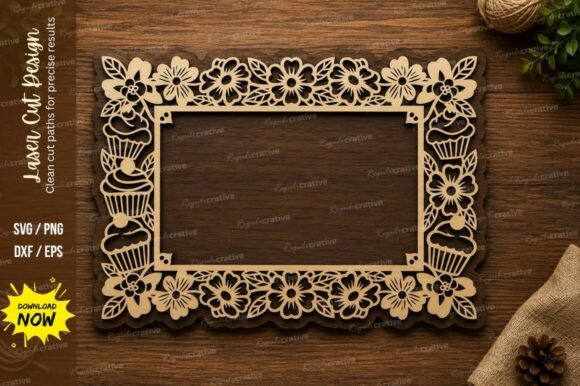
Floral Decorative Photo Frame Laser Cut
A Designer’s First Glance: Delicate, Not Dainty
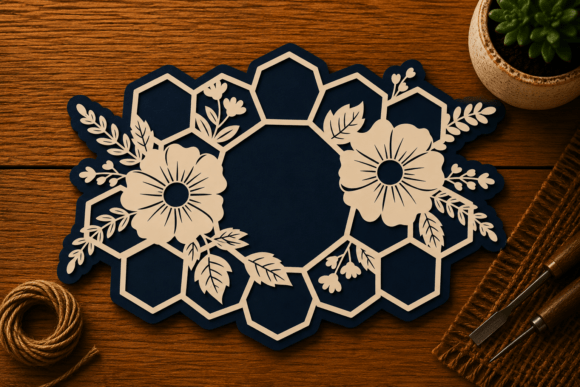
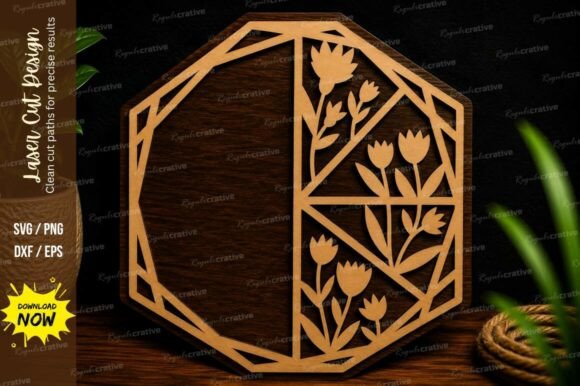
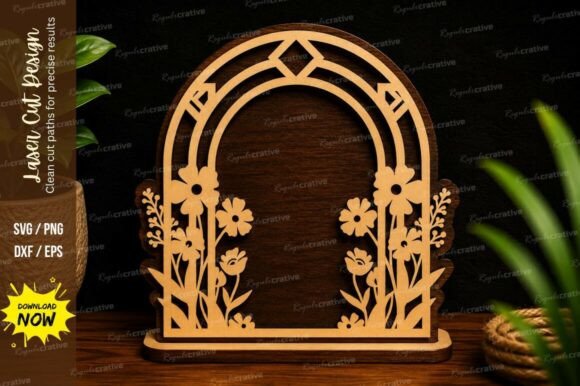
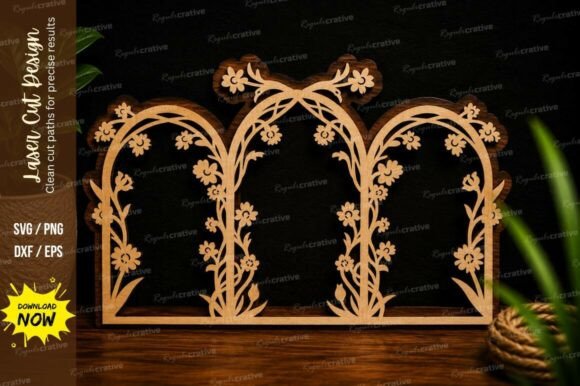
When I opened the Floral Decorative Photo Frame Laser Cut file set, my eye didn’t go straight to the center—it lingered on the outer vine work. That’s a good sign. The motif balances organic flow with clean geometry: soft petals taper into crisp, laser-defined stems, and the frame’s negative space feels intentional—not like leftover gaps, but like breathing room. It reads as “hand-drawn elegance,” not “clip-art filler.” As an embroidery designer who regularly translates laser-cut motifs into stitchable assets, I immediately pictured it stitched onto a linen pillow cover for a boutique nursery line—soft enough for baby items, structured enough for wall decor.
Where This Design Truly Belongs (and Where It Doesn’t)
I tested the Floral Decorative Photo Frame Laser Cut as the focal element on a custom embroidered tote bag—cotton canvas, medium-weight, with a 5×7 hoop. The result? Crisp, legible, and quietly luxurious. Customers paused at the booth to touch the stitching—not just look. That tells me this design carries weight without heaviness. It works beautifully on sweatshirt embroidery (especially charcoal or oatmeal fleece), where the contrast between plush fabric and precise floral lines adds tactile interest. On tea towels? Yes—especially when paired with a simple monogram inside the frame. For baby embroidery? Ideal for onesies or burp cloths—but only if you simplify inner details in your digitizing stage. Tiny buds and fine tendrils don’t translate cleanly at 3 inches tall on stretchy knit.
It’s less suited for caps or curved surfaces unless you’re willing to split and reposition elements manually. The upper arch of the frame resists smooth hooping on rigid cap frames, and dense fill stitches in tight corners can pucker thin twill. Likewise, avoid layering it directly over seams or pockets—those subtle curves in the stem work demand flat, stable ground.
Stitching Realities: Density, Detail, and Decision Points
This isn’t a “drop-in-and-embroider” machine embroidery design out of the box—it’s a laser-cut *source*. That means your digitizing choices will define its success. The original SVG and DXF files give you full control over satin stitch width on petals, running stitch spacing along vines, and fill stitch angle in background sections. But that freedom comes with responsibility: too much density in the inner floral cluster creates stiffness on lightweight fabrics; too little, and the frame loses definition on dark fabric.
I recommend testing the Floral Decorative Photo Frame Laser Cut on scrap cotton twill first—then comparing black thread on ivory linen versus white thread on navy chambray. You’ll quickly see which inner details hold up (the central bloom does well) and which fade (fine leaf veins need slight thickening for real-world wear). Also check how it reads in a printable mockup: if the shape disappears in grayscale previews, it’ll struggle on Etsy listings or social ads.
Commercial Use Considerations for Craft Businesses
As an Etsy seller and small shop product developer, I pay close attention to how a design affects perceived value—and this one lifts it. A customer buying a personalized gift isn’t just paying for thread and time; they’re paying for *recognition*. The Floral Decorative Photo Frame Laser Cut signals intentionality. It says “this was chosen, not slapped on.” That builds trust—especially for wedding gifts, holiday embroidery, or boutique branding where consistency matters. But remember: licensing isn’t implied. Before listing finished products or selling digital embroidery files derived from this set, verify commercial rights. Don’t assume “SVG + PDF = unlimited use.”
Fabric & Stabilizer Notes You Can’t Skip
Texture changes everything. On textured linen or burlap, reduce fill stitch density by 15–20% and widen satin borders slightly—otherwise, detail drowns. For stretchy fabric like jersey, use cutaway + tearaway stabilizer combo and slow your machine speed. And never skip the stabilizer test—even with “premium quality laser cutting design file set, carefully prepared for smooth and precise cutting,” your fabric is the wild card.
Final Thoughts for Embroidery Designers & Makers
The Floral Decorative Photo Frame Laser Cut isn’t flashy—but it’s reliable. It won’t dominate a busy garment, but it elevates quiet pieces: an apron for a local bakery, a pillow cover for a wellness studio, a patch for a handmade backpack brand. Its strength lies in versatility—not volume. Use it thoughtfully, digitize with intention, and always test before committing to client work or bulk production. It’s the kind of design that makes your handmade product feel considered, your personalized gift feel meaningful, and your craft business feel cohesive.
Before You Stitch: Five Quick Checks
- Confirm hoop size compatibility—does the full frame fit comfortably within your standard hoop, or will you need to split?
- Review thread color contrast on both light and dark fabric swatches—some petal layers vanish on black without slight outline reinforcement.
- Inspect tiny corners and inner loops in your embroidery software—do they have enough stitch clearance for smooth travel?
- Test stabilizer choice on scrap fabric matching your final project—especially for textured or stretchy materials.
- Verify licensing terms before using in commercial embroidery, digital product sales, or Etsy listings.