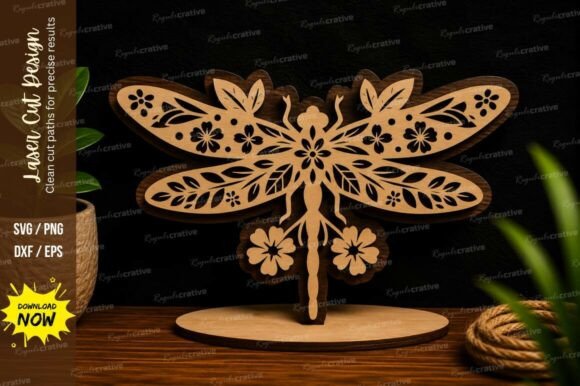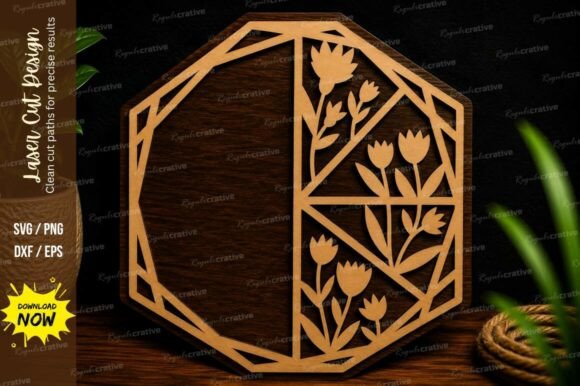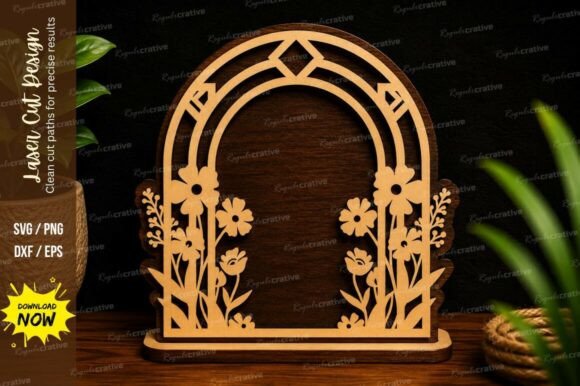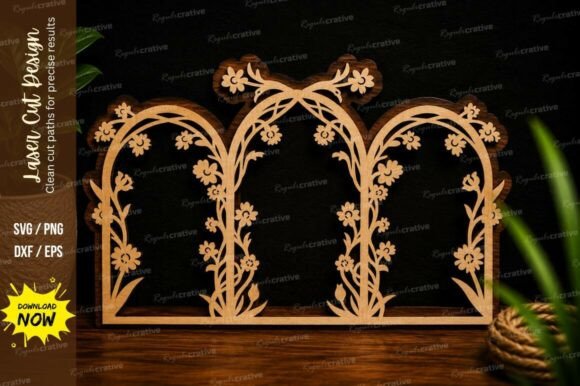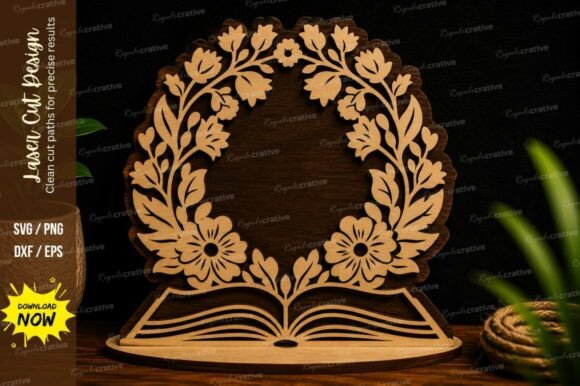
Floral Wreath Book Theme Laser Cutting Wall Decor
As a brand designer who’s helped over 80 local businesses refine their visual identity—from neighborhood bakeries to artisan candle studios—I opened Floral Wreath Book Theme Decorative Lase expecting charm, but was struck by how thoughtfully balanced it is: soft botanical curves meet structured bookish symmetry. It reads as elegant yet approachable, handmade but precise, and quietly literary without being academic. This isn’t generic clipart—it’s a considered graphic design asset with clear intention: warmth, craft, and quiet sophistication. For a small business branding project—say, a handmade soap brand launching seasonal “Botanical Chapter” packaging or a children’s bookstore café rolling out branded takeout bags—it lands with immediate emotional resonance.
Where This Design Asset Earns Its Keep in Real Local Business Projects
Floral Wreath Book Theme Decorative Lase shines where authenticity and tactile appeal matter most. I recently used it for a Portland-based florist-bakery hybrid (Petal & Crumb) to unify their product label system: the wreath wraps elegantly around jarred lavender honey labels, frames custom thank-you cards tucked into gift boxes, and scales beautifully as a subtle watermark on their menu graphics. Because it’s delivered as a Premium quality laser cutting design file set, it performed flawlessly—not just digitally, but physically. We cut it from matte kraft paper for hang tags and birch plywood for wall decor signage, and every curve held crisp detail.
Here’s where it delivers measurable business value:
- Stronger first impression: Appears instantly on packaging, signaling care and intentionality—even before the customer reads the brand name.
- Better product recognition: Repeating the wreath motif across stickers, labels, and social media banners builds visual consistency customers subconsciously track.
- Clearer visual hierarchy: Its organic frame naturally draws the eye inward—ideal for spotlighting product names or key messaging on flyers or price lists.
- More consistent brand identity: Works cohesively whether printed on recycled paper bags (for a boutique) or embossed on soy-wax candle lids (for a home fragrance brand).
- Improved customer trust: The precision of the vector forms signals professionalism—especially important for food businesses needing clean, compliant packaging design.
Top 7 High-Impact Uses for Small Business Branding
This isn’t just decorative—it’s functional scaffolding for local business presentation. In my work, Floral Wreath Book Theme Decorative Lase consistently excels in:
- Product labels: Especially for apothecary-style goods (soaps, teas, syrups)—the wreath adds heritage weight without clutter.
- Packaging accents: As a border on mailer boxes or a corner flourish on tissue paper folds.
- Hero graphics: Centered on Instagram carousels or website banners for seasonal campaigns (“Spring Storytime Collection”).
- Decorative brand elements: Subtle repeats in background patterns for printable inserts or email headers.
- Promotional banners: Cut from acrylic or wood for in-store wall decor that doubles as photo-ready branding.
- Product mockups: Layered over realistic packaging templates to pitch new SKUs to retailers or investors.
- Seasonal packaging: Paired with hand-lettered typography for limited-edition holiday tins or Easter egg cartons.
Use With Care: Contexts That Challenge Its Strengths
While versatile, this graphic design asset isn’t universal. Avoid deploying it where clarity trumps charm:
- Formal corporate branding: Its gentle rhythm feels incongruous beside strict financial or legal services.
- Very small labels: Below 1.5 inches wide, fine vine details risk filling in during print or laser cutting—always test at actual size.
- Crowded product packaging: If your label already features dense ingredient lists or certifications, the wreath competes rather than complements.
- Ingredient-heavy layouts: On food or skincare packaging, prioritize regulatory text legibility first.
- Low-contrast backgrounds: The delicate lines fade against light grays or creams—verify contrast ratios before finalizing.
- Luxury minimalist brands: It introduces warmth and texture; if your brand voice is stark monochrome or industrial, it dilutes cohesion.
Practical Designer Notes You’ll Wish You Had Earlier
Before integrating Floral Wreath Book Theme Decorative Lase into client work, run these checks:
- Test it on real packaging mockups—not just digital previews. Paper stock, ink absorption, and cutting tolerances change everything.
- Check black-and-white usage: Does it retain shape and readability when stripped of color? Critical for cost-effective printing.
- Preview it on small labels at 100% scale—some SVG paths collapse or alias unpredictably at tiny sizes.
- Test it with your brand colors: Does it harmonize with muted earth tones (ideal) or clash with neon accents?
- Compare it with competitor packaging: Is it distinctive enough to stand out on a crowded shelf—or too similar to what’s already there?
- Review PNG transparency: Does the alpha channel hold cleanly on textured backgrounds like kraft paper or linen?
- Inspect SVG or vector editability: Can you easily isolate stems, flowers, or book motifs for custom arrangements?
- Test it beside serif, sans serif, script, handwritten, and display fonts: Its rhythm pairs best with gentle serifs (e.g., Playfair Display) or airy sans (e.g., Montserrat Light), not aggressive display fonts.
- Confirm commercial licensing before using it for client work, business branding, or physical product sales—this is non-negotiable for professional branding.
Ultimately, Floral Wreath Book Theme Decorative Lase isn’t just another digital product—it’s a strategic tool for small business branding. When used intentionally, it elevates packaging design, deepens emotional connection, and reinforces local business credibility. Whether you’re designing for a candle brand, a children’s boutique, or a seasonal food line, this asset bridges editorial design sensibility with hands-on commercial design practicality. Just remember: the best decoration doesn’t shout—it invites, reassures, and stays memorably true to the brand’s voice.